Every Major Home Loan Type, and Who Each One Is Actually For
Meta description: Jumbo, conventional, non-QM, DSCR, VA, FHA. A plain breakdown of what each loan is built for, what disqualifies people, and how to tell which one fits your situation in California.
Loan options usually get handed to buyers as a menu, which is a bad way to think about it. You're not picking a favorite. In most cases your situation narrows things down to one or two real choices, and the work is figuring out which ones before you're sitting in escrow.
Here's what each major loan type is built for, and the specific thing that tends to knock people out of each one.
First, the numbers that decide a lot of this
The 2026 baseline conforming loan limit is $832,750, up from $806,500 last year. High-cost counties run higher, and most of Southern California is high-cost:
- Los Angeles and Orange counties: $1,249,125, which is the national ceiling
- San Diego County: $1,104,000
- Riverside and San Bernardino: baseline, $832,750
There's a middle tier that gets skipped in most explanations. A loan between $832,750 and your county limit is high-balance conforming, sometimes called super conforming. It's still a conventional loan and still Fannie or Freddie, but it prices slightly worse than baseline. So in San Diego you're really looking at three brackets, not two: conforming up to $832,750, high-balance up to $1,104,000, jumbo above that.
Worth knowing which bracket your target price falls into before you start touring houses, not after.
Conventional
For W-2 borrowers with documentable income, reasonable debt-to-income, and a purchase price under the conforming limit. Backed by Fannie Mae or Freddie Mac.
The advantage people overlook is that the mortgage insurance comes off. Once you reach 80% loan-to-value you can request cancellation, and at 78% it drops automatically. That's a real difference from FHA, where in most cases it doesn't.
Down payments start at 3% for qualifying first-time buyers, though putting more down improves your pricing.
What knocks people out: DTI above guideline, or a purchase price over the county limit.
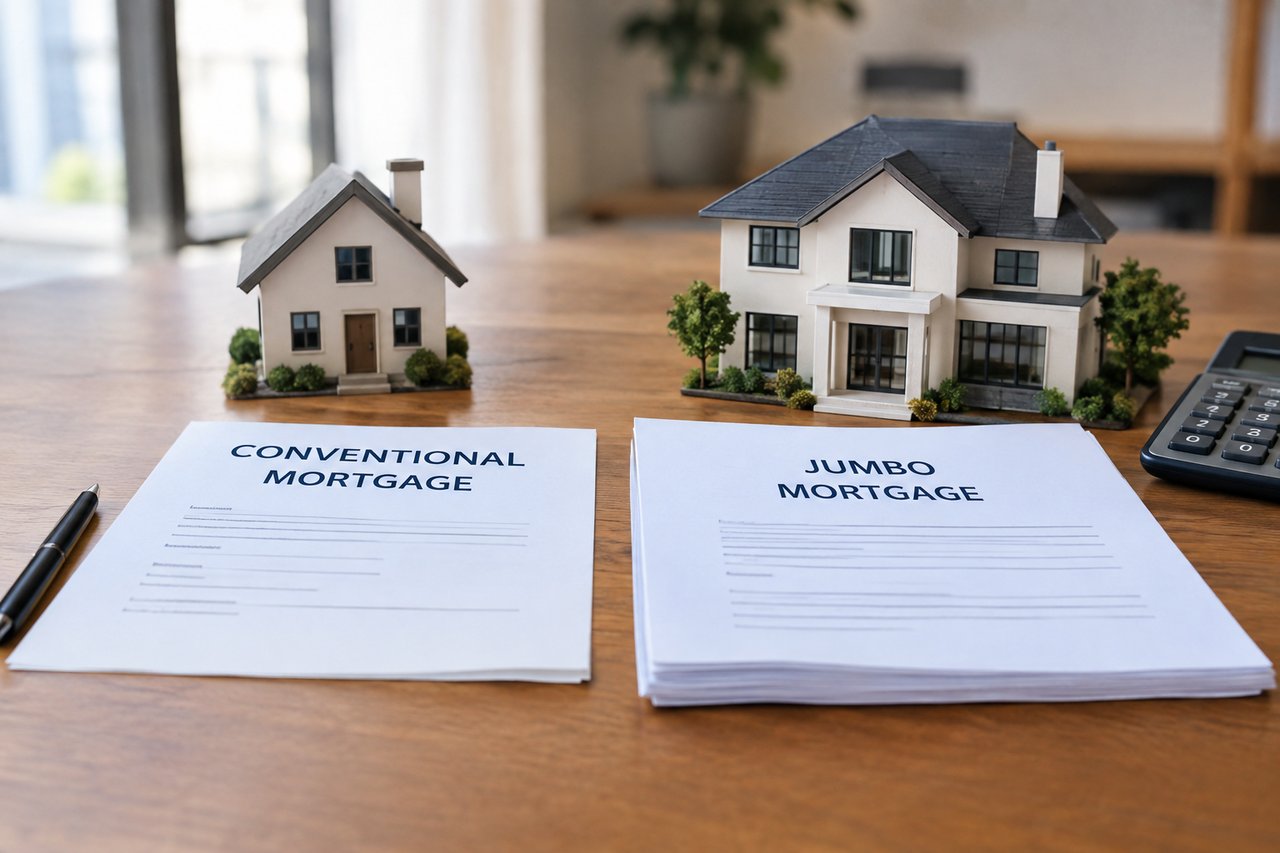
Jumbo
Anything above the conforming limit, which in coastal Southern California is a lot of houses.
Jumbo rates are competitive and sometimes price below conventional, which catches people off guard. The tradeoff is documentation. Lenders want stronger credit, more reserves (often six to twelve months of payments still in the bank after closing), and a cleaner overall file. Underwriting is manual, so it takes longer and asks more questions.
What knocks people out: Thin reserves. Buyers who put everything into the down payment and keep nothing back tend to stall here.
Non-QM and bank statement loans
For self-employed borrowers, business owners, and 1099 contractors whose tax returns understate what they actually earn. If you write off aggressively, your net income can look like a fraction of your real cash flow, and conventional underwriting only sees the net.
These programs qualify you on 12 or 24 months of bank statement deposits instead, or on asset depletion if you have a large portfolio and irregular income.
You do pay for the flexibility. Expect a higher rate than conventional and a larger down payment, usually 15% to 20% at minimum.
What knocks people out: Not much. This category exists specifically for the people the standard box rejects. The real question is whether the rate is worth it, or whether waiting a year for cleaner returns makes more sense.
DSCR
For investment property. Qualifies on the property's rental income measured against the payment, not on your personal income. No tax returns, no employment verification.
The main reason investors reach for it: conventional financing caps you at ten financed properties, and DSCR doesn't count toward that. If you're scaling, that ceiling shows up faster than you'd expect.
Most programs want a coverage ratio of at least 1.0, with better pricing as you move toward 1.25. Down payments generally run 20% to 25%.
What knocks people out: The property not covering. This is also where short-term rental buyers hit trouble, when local ordinances stop the appraiser from using nightly rents.
VA
If you're eligible, this is almost always the right answer and it isn't close. Zero down, no monthly mortgage insurance, and rates that consistently beat conventional.
The part most write-ups leave out is the funding fee. First use with nothing down is 2.15% of the loan amount, and it can be financed into the loan instead of paid at the table. Those rates haven't moved since April 2023. Two things worth knowing about them: putting 5% down drops the fee to 1.50%, and 10% down drops it to 1.25%. Veterans with a service-connected disability rating of 10% or higher pay nothing at all.
Full entitlement means no loan limit, so VA works at San Diego and South Bay price points more often than buyers assume. You can go above $1,104,000 with zero down.
What knocks people out: Eligibility, and occasionally a seller who doesn't understand VA appraisals. That second one is a negotiation problem, not a loan problem.
FHA
3.5% down with a 580 score, and more forgiving on credit history than conventional. It's the entry point for buyers still building. FHA county limits match the conforming ones here, $1,249,125 in Los Angeles and Orange and $1,104,000 in San Diego, so it reaches further up the market than most people assume.
The catch is the mortgage insurance, which is two separate charges. Upfront MIP is 1.75% of the loan amount, usually financed in. Annual MIP is 0.55% for most borrowers nationally, but loan amounts in this market generally land in the higher-balance tier, where it runs 0.70% to 0.75%. Both have held since HUD's 2023 reduction.
The bigger problem is duration. With less than 10% down, MIP stays for the life of the loan and the only exit is refinancing out of FHA entirely. Put 10% or more down and it drops after eleven years, though at that down payment you should be pricing conventional side by side before you commit.
Treat FHA as a starting structure, not a permanent one. Get in, build equity, refinance out when the numbers support it.
What knocks people out: A property that won't pass FHA appraisal standards, or a purchase price above the county limit.
Sorting it out
W-2 buyer under the limit: conventional. Over the limit with reserves: jumbo. Self-employed with heavy write-offs: non-QM. Buying a rental: DSCR. Veteran: VA, full stop. Building credit with limited savings: FHA, with a plan to leave it.
Most files really are that clean. The ones that aren't usually involve someone who fits two categories and has to work out which costs less over the time they'll actually hold the loan. That's a numbers conversation, and it's worth having before you write an offer instead of after.
Talk it through with us
We're in El Segundo and San Diego, and we run all of these programs. That matters more than it sounds like it should, because a lender who only does one product will always find a reason that product is right for you.
Call 800-913-2169 and we'll put your actual numbers against two or three structures so you can see the difference side by side before you commit to anything.