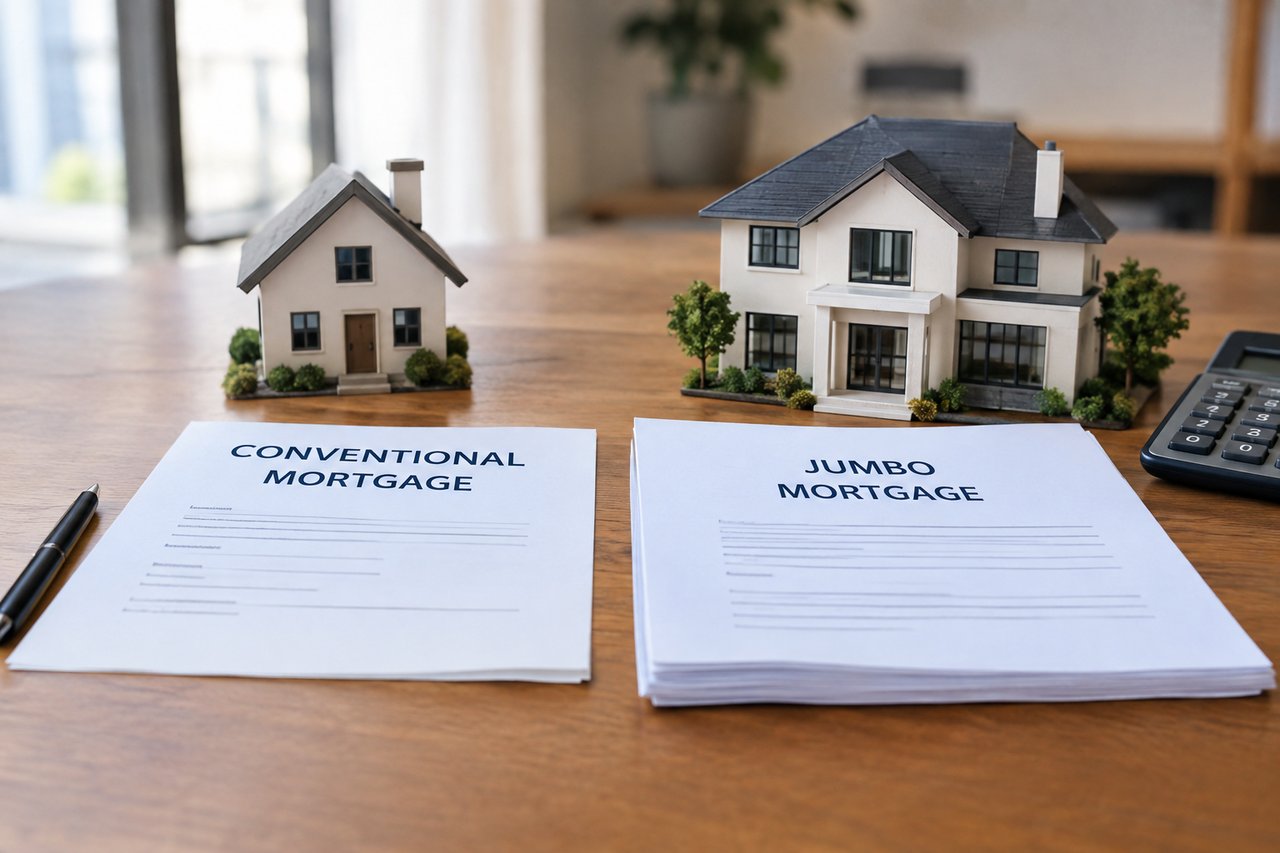
Buying a home is a major financial decision, and choosing the right mortgage can have a big impact on how much you pay over the life of the loan. If you're comparing mortgage options, you may have come across conventional and jumbo mortgages.
While both can be used to finance a home purchase, they are designed for different borrowing needs. The biggest difference is the loan amount: conventional mortgages follow conforming loan limits set by housing regulators, while jumbo mortgages are used when the amount you need exceeds those limits.
Understanding how these loan options differ can help you determine which option makes more sense for your financial situation.
What is a Conventional Mortgage?
A conventional mortgage is a home loan that isn't insured or guaranteed by a government agency such as the Federal Housing Administration (FHA), Department of Veterans Affairs (VA), or U.S. Department of Agriculture (USDA).
Many conventional loans are conforming loans. A conforming conventional loan meets the requirements established by Fannie Mae and Freddie Mac, including applicable loan limits.
These loans are commonly used by homebuyers purchasing primary residences, second homes, and, depending on the program, investment properties.
One of the biggest advantages of a conventional mortgage is the variety of options available. Borrowers may qualify with different down payment amounts depending on the loan program and their financial profile.
What is a Jumbo Mortgage?
Jumbo mortgages are designed for borrowers who need to borrow more than the conforming loan limit allows in their location. Because the loan amount is larger than what Fannie Mae and Freddie Mac will generally purchase or guarantee under their standard conforming guidelines, jumbo loans are considered non-conforming mortgages.
Jumbo financing is often used to purchase higher-priced homes in expensive housing markets or properties that require a larger loan amount.
Because lenders are taking on a larger amount of risk, qualifying for a jumbo mortgage can involve stricter financial requirements. Lenders may look closely at your income, assets, credit history, debt levels, and overall financial stability.
Jumbo vs. Conventional Mortgage: Key Differences
Although both mortgages can be used to purchase a home, they differ in several important ways.
Jumbo or Conventional Mortgage: Which One is Right for You?
There is no single mortgage option that is best for every borrower. A conventional mortgage may be a good fit if your financing needs fall within the applicable conforming loan limits. A jumbo mortgage may be more appropriate when you need to finance a higher loan amount that exceeds those limits.
The decision should take into account more than the loan amount. Consider:
The property's location and applicable conforming loan limit
Your purchase price
How much you plan to put down
Your credit profile
Your income and debt obligations
Your available cash reserves
Interest rate and overall loan costs
Your short- and long-term financial goals
Comparing both options can help you understand the trade-offs before committing to a mortgage.
How to Compare Jumbo and Conventional Loans
Before choosing a mortgage, look beyond the loan amount and compare the full cost of financing.
Consider:
Interest rate and annual percentage rate
Loan term and monthly payment
Down payment requirements
Closing costs
Mortgage insurance requirements
Cash reserve requirements
Credit and income requirements
Prepayment terms
Property eligibility
Fixed-rate versus adjustable-rate options
Getting quotes from reliable lenders can also help you understand how pricing and requirements differ for your specific situation.
Related Articles:
Top 5 Home Loans for First-Time Buyers
30-Year vs. 15-Year Mortgage: Which Is Better for You?
How Much House Can I Afford as a First-Time Homebuyer?
How Convoy Home Loans Simplifies Your Mortgage Search
Convoy Home Loans offers a range of home loan options designed to accommodate different borrower needs, including FHA, VA, Jumbo, Super Jumbo loans, creative financing, and more.
1. Personalized Loan Matching
We review your financial profile, loan goals, and property details to help identify mortgage programs that fit your specific situation. For jumbo loans, we review your income, assets, credit, and property information as part of the underwriting process.
2. Wholesale Jumbo Access
Convoy Home Loans maintains relationships with wholesale jumbo lenders, giving borrowers access to specialized financing options for high-value properties.
3. Compare Loan Costs and Terms
Rather than focusing only on the interest rate, we help borrowers compare different loan programs, payment structures, and financing terms based on their individual circumstances. This can make it easier to understand the differences between conventional, jumbo, and other mortgage options.
Conclusion
The primary difference between a jumbo and conventional mortgage comes down to loan size and conforming loan limits, but the decision involves much more than that.
A conventional mortgage may be suitable when your loan amount falls within the applicable conforming limit. A jumbo mortgage can provide financing for higher-value purchases when the amount you need exceeds that limit.
Before choosing, compare the down payment, interest rate, closing costs, reserve requirements, monthly payment, and overall borrowing cost. Working with an experienced mortgage professional can help you evaluate both options and select financing that aligns with your home-buying goals.