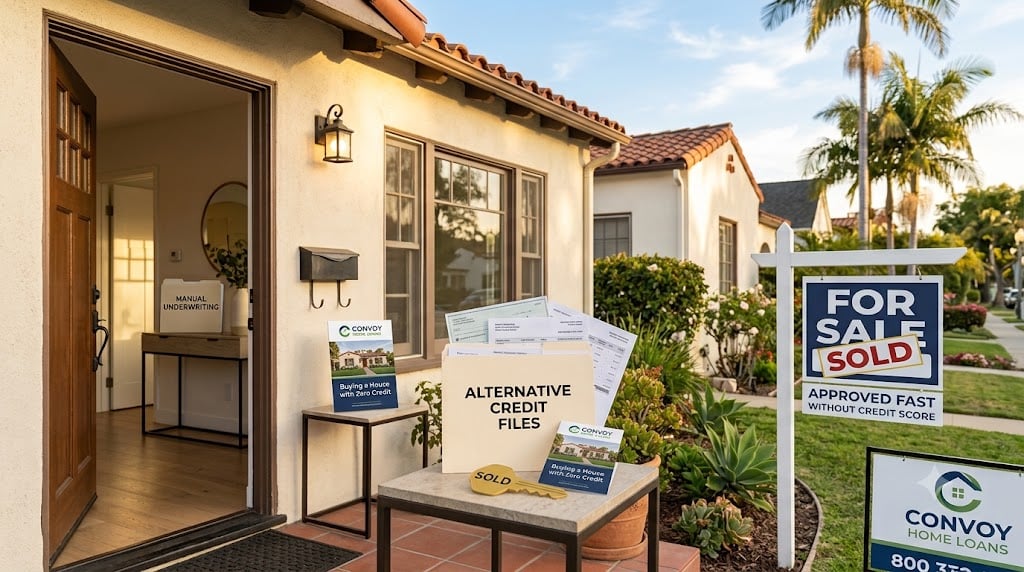
How to Buy a House With No Credit Score
Meta description: No credit score is not the same as bad credit, and it doesn't disqualify you. Here's what lenders accept instead and how to prepare for it.
If you've never had a credit card or a car loan, you may not have a credit score at all. Not a bad one. None.
That's a different situation than bad credit, and it's worth knowing that lenders treat it differently too. There are established programs for borrowers with no score. They're slower and they require more paperwork, but they exist, and people close on houses through them every month.
Here's how it actually works.
First, find out what you're dealing with
Pull all three credit reports at AnnualCreditReport.com. It's free.
You're checking two things. Whether you genuinely have no score, or a thin file that produced a low one. And whether something is sitting on your report that you don't know about, like an old medical collection or a utility account from a former roommate. Both happen more than you'd think, and both change the plan.
No score and a 580 are handled through completely different channels. Confirm which you have before doing anything else.
What replaces a credit score
Lenders call it nontraditional credit. You're demonstrating that you pay things on time using accounts that don't report to the bureaus.
Most programs want three references covering at least twelve months. Common ones:
- Rent, which is the most important by a wide margin
- Utilities in your name that aren't included in rent: electric, gas, water, phone, internet
- Insurance premiums you pay directly, meaning auto, renters, or life, as long as it isn't deducted from your paycheck
- Childcare or tuition payments
- A documented pattern of regular savings deposits with no overdrafts
FHA is usually the most accessible route for this. Conventional programs can work too, generally on a primary residence you'll occupy. If you're a veteran, VA loans handle no-score borrowers particularly well and evaluate residual income rather than leaning entirely on ratios, so start there.
The problem nobody warns you about
If you pay rent in cash, or through Venmo or Zelle to a private landlord, you may have no documentable housing history at all.
This is the most common reason these files fall apart, and rent is the reference lenders weigh most heavily.
Start fixing it now, before you're shopping. Pay by check or bank transfer with a clear memo, from an account in your name, every month. You want twelve consecutive months of it. If your landlord is a person rather than a management company, you'll likely also need them to complete a verification of rent form, so it helps to have a relationship where that's an easy ask.
If you've been paying cash for two years, you can't retroactively fix it. You can start today and be documented in a year.
What else underwriters look at
With no score, a human reviews your file rather than an automated system, and they're looking for reasons to feel comfortable.
Your ratios. Manual underwriting caps debt-to-income lower than automated approval does. On FHA files using nontraditional credit, expect something in the range of 31% for housing and 43% total, without much room to argue. That's the trade-off people don't anticipate: you gain access, you lose flexibility on how much house you can buy.
Reserves. Money left over after closing, usually measured in months of mortgage payments. More is better and it directly strengthens a manual file.
Documented, seasoned funds. Every dollar of your down payment needs a traceable source. Sixty days of bank statements, and any large deposit needs an explanation. If you've been saving cash at home, get it into the bank now, because it needs time to season before it counts.
Job stability. Two years in the same line of work is the benchmark.
One piece of counterintuitive advice
Don't rush out and open three credit cards to build a score.
A brand new account with two months of history can produce a thin, weak score, and in some cases having a poor score is treated less favorably than having none at all with strong nontraditional credit. It also puts new inquiries and new debt on your file right when you're applying.
If you're buying within the next few months, work the nontraditional credit path. If you're eighteen months out and not in a hurry, a secured card used lightly and paid in full monthly is a reasonable way to establish a score, and it'll give you more options when you do buy. Which path makes sense depends entirely on your timeline, and it's worth being honest with yourself about that.
Give it more time than you think
This is the practical thing to plan around. Manual underwriting is a person reading documents, not software returning an answer in ninety seconds. It takes longer at every stage.
Start the preapproval process well before you want to shop. Get the full manual underwrite done upfront rather than a surface-level letter, so you know what you qualify for and so your offer carries weight. And when you write an offer, don't agree to a twenty-one day close. Give yourself the time the file actually needs.
Where to start
Bring us twelve months of rent documentation, your two most recent years of tax returns, sixty days of bank statements, and a list of the bills you pay in your own name. We can tell you fairly quickly whether the file works and what's missing.
Call 800-913-2169. If you're a year out from buying, that's a better time to call than a month out, because most of what makes these files work is documentation you have to start building in advance.