Using Equity Instead of Cash: How Cross-Collateralization Actually Works
Meta description: How Southern California buyers pledge existing property equity as the down payment on a new purchase, what a blanket loan really costs, and when a cash-out refinance is the smarter move.
There's a specific situation this solves. You own two or three properties with real equity in them. You want to buy something else. You have the net worth for it, just not sitting in a checking account, and you don't want to sell anything to free up a down payment.
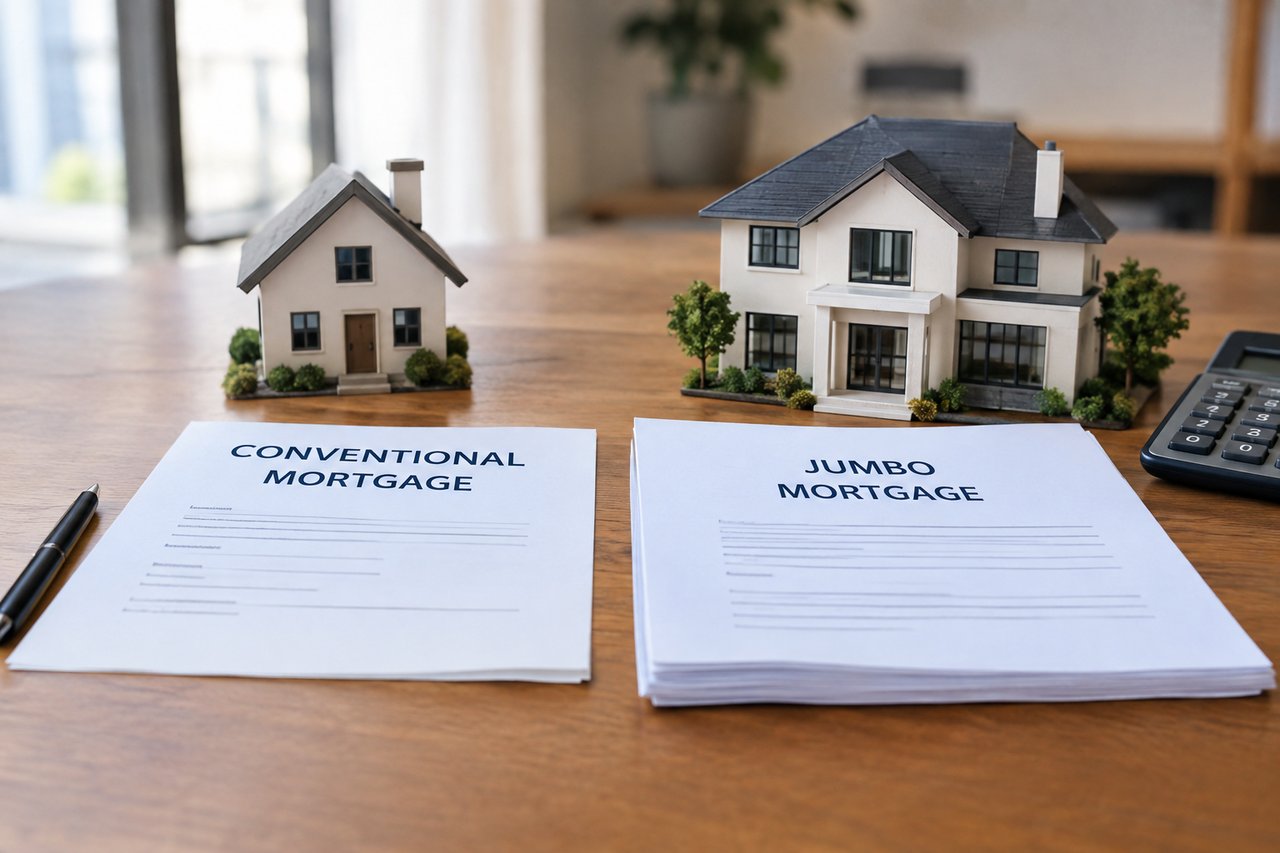
The conventional answers are to sell something or write a large check. Cross-collateralization is a third option. You pledge equity in a property you already own as additional security on the new loan, so that equity does the job the cash would have done.
It's a legitimate tool. It's also more complicated and more expensive than the alternatives, and it puts a property you already own on the line. Worth understanding both halves before you ask for it.
How it actually works
A normal purchase loan is secured by one property. A cross-collateralized loan is secured by two or more: the one you're buying and one or more you already own.
Because the lender holds more collateral, they'll lend against a higher share of the new purchase price. Sometimes that means little or no cash at closing.
What governs the deal is combined loan-to-value, meaning total debt across every pledged property measured against their total value. Most lenders in this space want combined LTV somewhere in the 65% to 75% range, though it moves by investor and property type.
That's the constraint people miss. It isn't "you have equity, so you can buy with nothing down." It's "the entire pledged pool has to stay under a ceiling." If your existing properties are already leveraged at 70%, there isn't much room, no matter what they're worth on paper.
A quick example. Say you own a rental in Torrance worth $1.4M with a $600K loan on it, and you're buying a $1.6M property. Pledge both and the pool is worth $3M. At 70% combined LTV, total debt can run about $2.1M. You already owe $600K, which leaves $1.5M available for the purchase. That covers most of the $1.6M, so you'd bring roughly $100K plus closing costs instead of the $320K a conventional 20% down would require.
Your numbers will differ. But that's the shape of it.
What it costs
A higher rate than a conventional loan on the same property, most of the time. These are non-QM products and they price like it.
Two appraisals instead of one, sometimes more. Title work on every pledged property. Longer underwriting, since someone is manually reviewing the whole picture rather than running it through an automated system.
Budget more time than a standard purchase. Thirty days is optimistic here. Forty-five is realistic.
The part that usually gets left out
If the new loan goes bad, the lender can foreclose on the property you pledged. Not only the one you bought.
That's the actual trade. You aren't getting free leverage. You're taking an asset that was paid down and safe and exposing it to a deal that hasn't proven out yet.
There's also a release problem worth asking about upfront. Once properties are tied together under one lien, selling any one of them requires the lender's approval, and usually a paydown to bring the remaining collateral back inside their LTV limits. If there's a chance you'll want to sell that Torrance rental in three years, find out what releasing it costs before you sign, not after.
Price the simpler options first
Most people asking about cross-collateralization are better served by something more boring.
Cash-out refinance on the property you already own. Pull the equity out as cash, then buy the new place with a normal loan. Two clean loans, two separate properties, nothing entangled. Usually cheaper. This is the right answer more often than not.
HELOC. Faster and cheaper to set up than a refinance, and it leaves a low first-mortgage rate undisturbed. Draw what you need for the down payment. The rate is variable, which matters over a long hold.
Bridge loan. If you're buying before selling and the gap is measured in months, a bridge is built for exactly that and unwinds cleanly.
Cross-collateralization earns its complexity when the simpler options don't work. When a cash-out refi would cost you a mortgage rate you want to keep. When you need more capital than a HELOC will produce. When you're buying through an entity and want one structure across several properties. When the timeline is tight enough that stacking two separate transactions isn't practical.
On the tax question
Borrowing against equity isn't a sale, so it doesn't create a taxable event. That's accurate, and it's a real part of why people do this.
Be careful how it gets framed, though. You haven't avoided capital gains tax. You've postponed the decision. The basis and the eventual gain are both still sitting there. And if the property in question is a primary residence you've lived in for two of the last five years, the Section 121 exclusion may cover $250,000 of gain, or $500,000 married filing jointly, which means the tax you're structuring around could be smaller than you think.
We're a mortgage lender, not tax advisors, and none of this is tax advice. Run the real comparison past your CPA before deciding that avoiding a sale is worth a more complicated loan.
Who this actually fits
Investors holding several properties with meaningful equity and low leverage across the portfolio, often buying in LLCs, often with income that doesn't document cleanly on tax returns.
Owners sitting on a low first-mortgage rate they don't want to disturb, who need more capital than a HELOC will give them.
Buyers on a timeline where selling first isn't realistic and a bridge loan isn't large enough to cover the gap.
If you own one property with moderate equity and W-2 income, this probably isn't your product. A cash-out refinance, or a conventional loan with mortgage insurance, will almost certainly cost you less.
Talk it through with us
We write these, and we'll also tell you when you don't need one. Bring us the properties, the balances, and roughly what you're trying to buy, and we can usually tell you inside one call whether cross-collateralization actually beats the simpler route or just costs more.
Call 800-913-2169. We're in El Segundo and San Diego.