How Rehab Loans Actually Get Sized (And Why Your Number Is Lower Than You Think)
Meta description: Purchase plus rehab financing runs through four separate tests and you get the smallest one. Here's the math, and what usually kills the deal.
Most investors go into their first rehab loan thinking about leverage as a single number. Ninety percent of cost, or seventy-five percent of ARV, whatever the lender advertised.
It doesn't work that way. Your loan runs through several tests at once and you get whichever produces the smallest number. Understanding which test binds on your deal is the difference between knowing your cash requirement before you make an offer and finding out during escrow.
The four tests
A typical purchase-plus-rehab loan is constrained by all of these:
- A percentage of the purchase price
- The rehab budget, often financed at or near 100%, held back and released in draws
- A maximum loan-to-cost across purchase plus rehab combined
- A maximum percentage of after-repair value
Run a real deal through it. Say you're buying at $300,000, budgeting $100,000 in renovation, and the finished house should be worth $525,000.
At 90% of purchase you get $270,000. Add the full $100,000 rehab and you're at $370,000. But if the program caps you at 70% of ARV, that's $367,500, and the ARV test just became the binding one. Your loan is $367,500, so you're bringing $32,500 of the $400,000 total cost, plus closing costs, plus whatever you're floating between draws.
Now change one input. If the appraiser comes back at $475,000 instead of $525,000, the ARV cap drops to $332,500 and your cash requirement jumps to $67,500. Same purchase, same budget, twice the money out of pocket.
That's the whole game. ARV drives the loan on most deals, which means the appraisal is the number your entire capital plan depends on.
The appraisal is where deals break
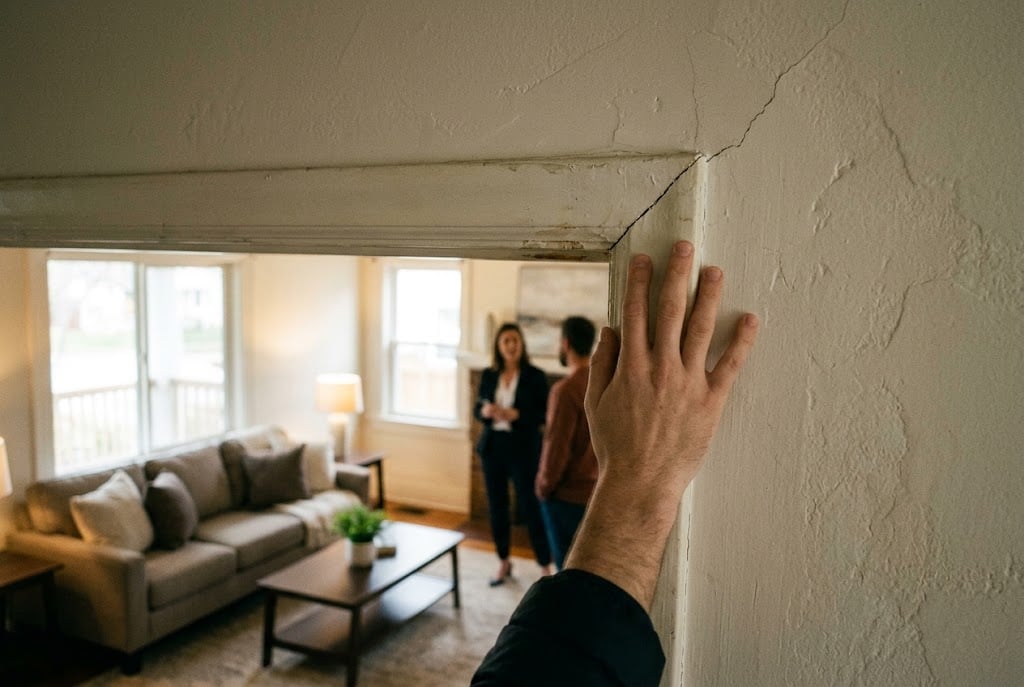
Rehab loans use a subject-to appraisal, meaning the appraiser values the property as if your scope of work is already complete. They're valuing your plans.
Two things go wrong. The appraiser doesn't support your ARV, and your loan shrinks after you're already in contract. Or you've scoped improvements the neighborhood won't pay for, and the appraisal reflects the ceiling of the local comps rather than what you spent.
Protect yourself by pulling the comps yourself before you write the offer. Find three recent sales of finished properties similar to what yours will be, in the same neighborhood, and be conservative about it. If your ARV depends on being the highest sale the street has ever seen, assume the appraiser won't get there.
Then underwrite the deal at a lower ARV than you expect and see whether it still works. If it only works at your optimistic number, it's a thin deal.
Your scope of work is an underwriting document
Lenders want a line-item budget broken out by trade with real costs, not a one-page estimate with a total at the bottom.
Two failure modes here, in opposite directions. A padded budget inflates your ARV expectations and creates a gap the appraisal won't cover. An underbid budget gets the deal approved and then leaves you out of holdback in month four, paying for the rest of the kitchen yourself.
Build the budget you actually intend to spend, add contingency, and have your contractor sign off on it before it goes to underwriting. Changing scope mid-project is possible with most lenders but it means a change order review and a delay.
Also check the contractor requirements before you assume. Most lenders want licensed and insured, some maintain approval processes, and many won't let you act as your own general contractor. If your plan was to GC it yourself to save money, find out early whether the loan permits it.
Your track record prices the loan
This is the piece first-timers don't anticipate. Most rehab lenders tier leverage and pricing by experience, documented through a schedule of completed projects with addresses, purchase prices, and sale prices.
Someone with five finished flips in the past two years gets materially better terms than someone with none. That doesn't mean a first project can't get financed, but plan for lower leverage and more cash on your first two or three, and start keeping a clean record of every project from the beginning. It's an asset.
Ground-up is a different animal
If you're building rather than renovating, expect more upfront and more scrutiny. Approved plans and pulled permits before closing rather than after. Longer terms, typically twelve to eighteen months. Often an interest reserve funded out of the loan, which is worth recognizing as your own borrowed money being paid back to you as interest.
Experience requirements are stricter here too. Ground-up is generally not where you want your first project to be.
Plan the exit before you start
Whatever you're building toward, the refinance or sale needs to be mapped before you close on the bridge.
If you're running a BRRRR, the two dates that matter are when your bridge matures and when your permanent lender's seasoning requirement is satisfied. If the rehab runs long and those dates collide, you're refinancing under pressure. Ask both lenders their timelines before you buy, not in month seven.
And check the prepayment penalty on the bridge. Paying off short is the entire point of the loan, so a penalty that punishes it is a structural problem, not a detail.
One honest note about leverage
Financing the rehab means paying interest on the rehab, and interest is the line item that grows when the project slips. More leverage compresses your margin for error at the same time it reduces your cash in.
A deal that only pencils at maximum leverage isn't a leveraged deal, it's a thin one. Run it at 80% and see whether you'd still want it.
Talk it through before you offer
Send us the address, your purchase price, your rehab budget, and your ARV assumption, and we can tell you which test binds and what you'd actually need to bring. That's a fifteen-minute conversation and it's worth having before your offer, not after. Call 800-913-2169.